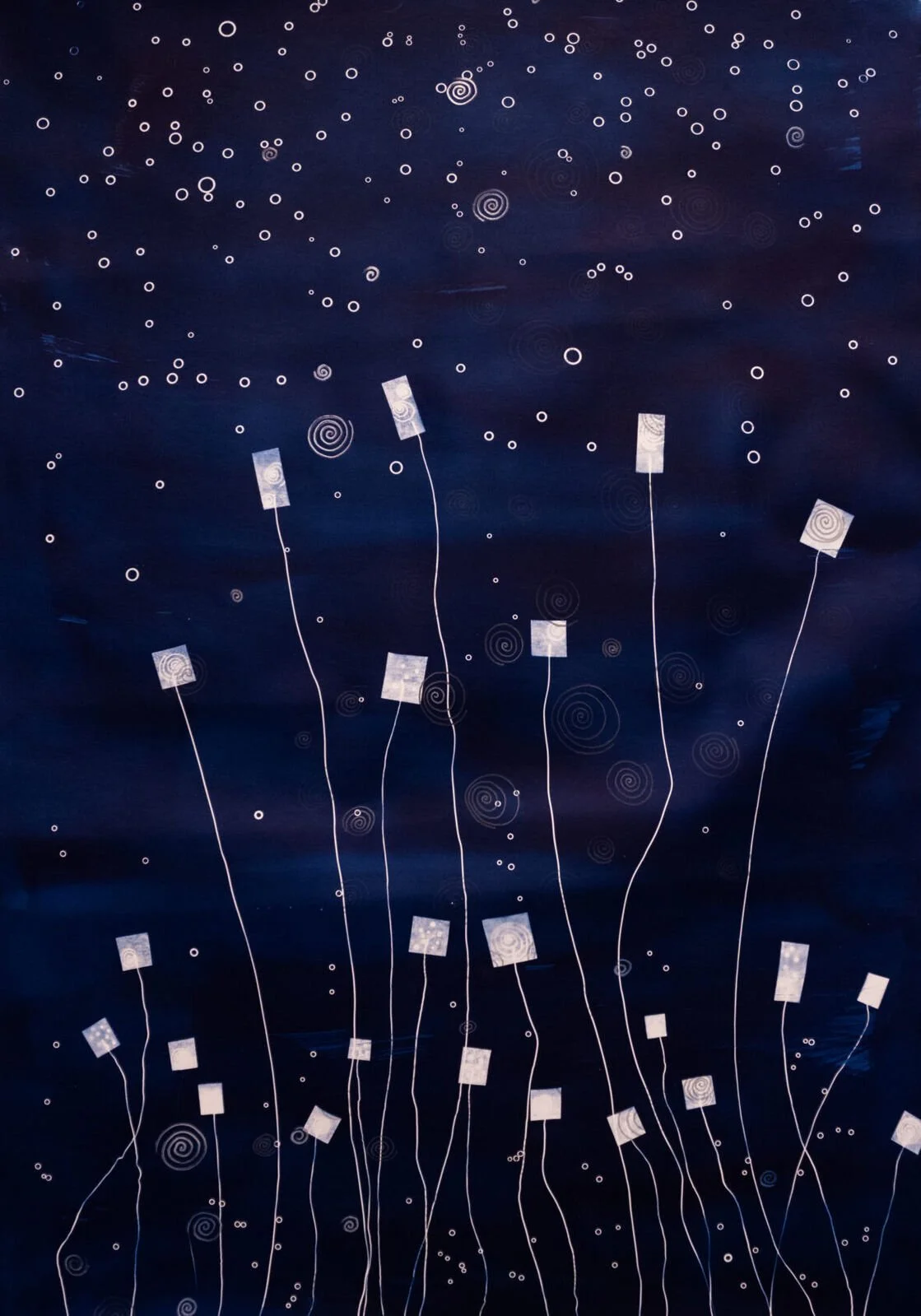
On The Intersection of Drawing and Photography, CPR GUEST ESSAY
I was asked to write an essay for the Cleveland Print Room newsletter and blog, and contributed some thoughts on my work and process in a historical context.
“The early history of photography takes several different paths seeking very distinct goals, all emanating from the discovery of chemical processes that would both render light and fix it in time. Leading up to the actual invention of photography, William Henry Fox Talbot experimented with sensitizing paper with sodium chloride and silver nitrate, and then placing objects directly on the paper and exposing it to sunlight to create reversed shadows of leaves, flowers, and other small items. He called these early examples at fixing an image “photogenic drawing”. Recording and drawing with light, sans camera, is photography in a pure form.
Early adopters like Anna Adkins saw the potential of photograms to create detailed “shadows” of the botanicals she wanted to record with the cyanotype process. Practitioners in the early 20th century like Christian Schad and Man Ray came to photograms from a dadaist/surrealist perspective, embracing new ways of mechanical reproduction to create art with a modernist bent. László Moholy-Nagy went even farther in his formal embrace of the camera and other scientific technology as vehicles to produce a new kind of art that could see beyond what the eye and imagination could not.
I think often about these early attempts at “writing with light” and how the practitioners of this mysterious process must have marveled at the alchemy of turning light into silver. The transformation still enchants me every single time I see an image develop and leave eerie shadows of the objects and lines I place on the paper.”
Read the full essay here: https://www.clevelandprintroom.com/publications/guest-contributors/on-the-intersection-of-drawing-and-photography